

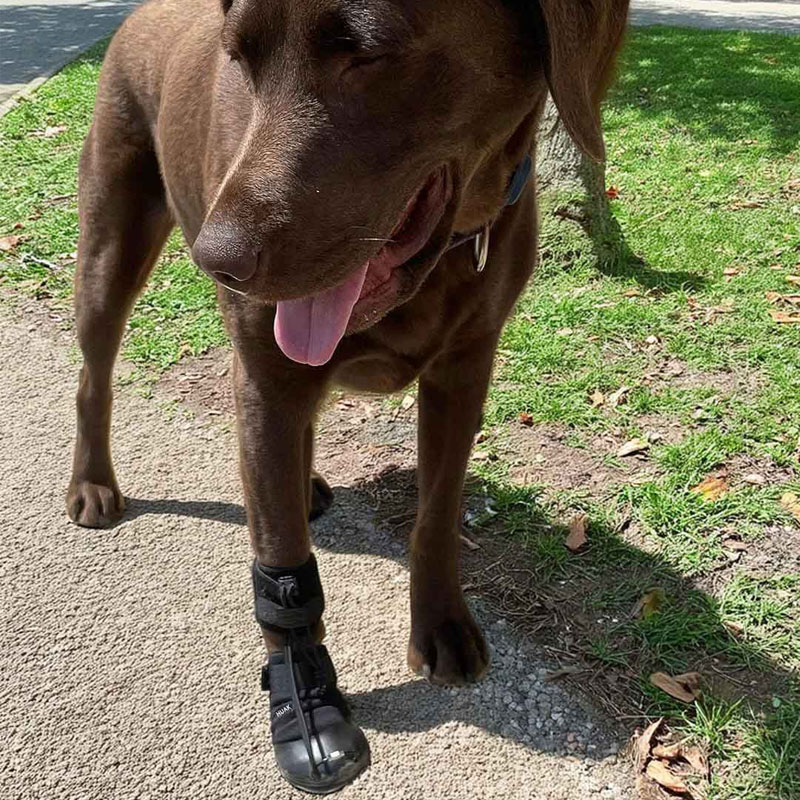
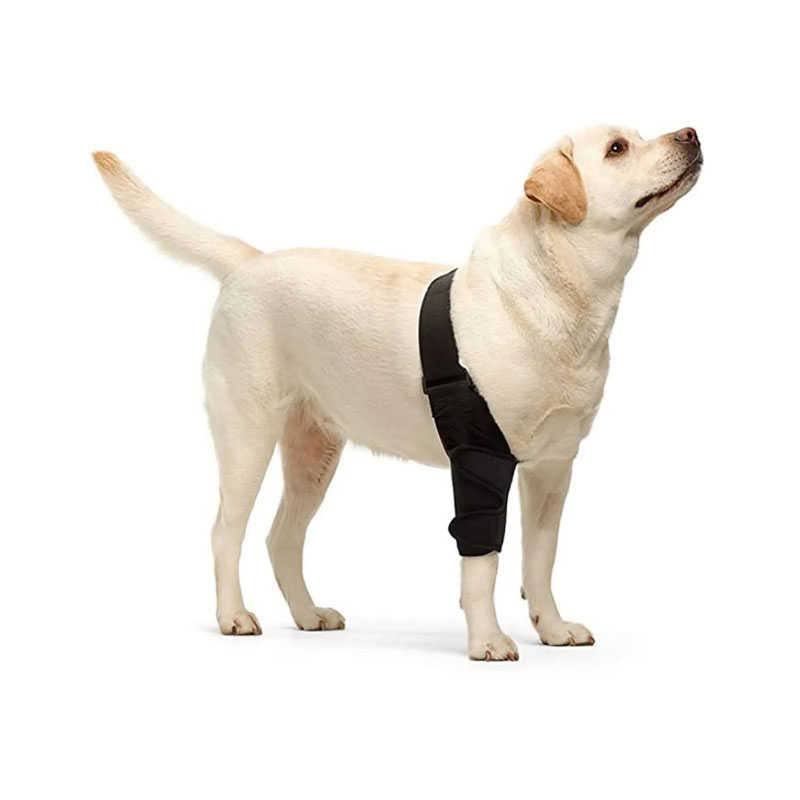
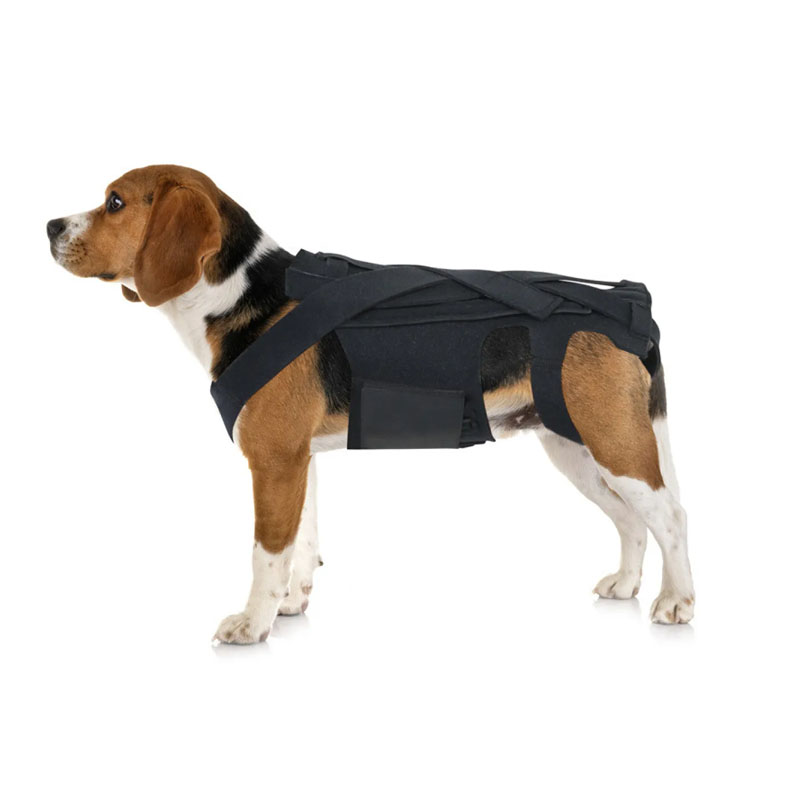
Imagine watching your Labrador Retriever, Max, limp after a short walk, his once bright eyes now dulled by pain. You've tried rest, medication, and even a custom brace from a local pet store, but his condition seems to be deteriorating. You're not alone. Many dog owners and veterinarians are discovering that not all elbow dysplasia braces are created equal. In fact, a poorly designed brace can exacerbate joint instability, accelerate arthritis, and cost you thousands in additional veterinary bills. The answer lies in precision-engineered orthopedic braces that address the root biomechanical issues. At Xiamen Huakang Medical Technology Co.,Ltd, we specialize in advanced medical devices for both humans and animals, leveraging over a decade of expertise in high-end manufacturing to create braces that truly work.
The Hidden Crisis in Canine Orthopedics
Elbow dysplasia is a common developmental disorder in large-breed dogs, affecting up to 18% of Labrador Retrievers and 30% of Rottweilers. The condition involves abnormal growth of the elbow joint, leading to pain, lameness, and early-onset osteoarthritis. While bracing is a non-invasive treatment option, the market is flooded with generic, one-size-fits-all products that fail to provide adequate support. Let's explore three critical pain points that plague the industry.
Pain Point 1: Improper Fit and Sizing
Scenario: A 3-year-old Golden Retriever named Bella is fitted with a standard medium brace from an online retailer. The brace is too loose around the upper arm, causing it to slip during activity. Within weeks, Bella develops chafing and pressure sores, and her lameness worsens. The owner spends $500 on the brace and an additional $800 on vet visits for wound treatment. The root cause? The brace lacks adjustable straps and contoured padding designed for the unique anatomy of a dysplastic elbow. Impact: Increased pain, reduced compliance, and wasted financial resources.
Pain Point 2: Inadequate Joint Stabilization
Scenario: A 5-year-old German Shepherd, Rex, has severe elbow dysplasia with medial compartment disease. His veterinarian prescribes a hinged brace to limit range of motion. However, the brace's hinge is not aligned with the dog's natural axis of rotation. Instead of stabilizing the joint, it creates shear forces that accelerate cartilage wear. Rex requires arthroscopic surgery six months later, costing $4,000. The brace, priced at $600, actually contributed to the decline. Cost: Direct financial loss plus irreversible joint damage.
Pain Point 3: Poor Material Quality and Durability
Scenario: A working Labrador from a hunting kennel in rural Montana uses a brace for daily training. The brace is made of low-grade neoprene that degrades after three months, losing its structural integrity. The dog experiences recurrent instability and eventually develops a complete elbow luxation. The kennel owner spends $2,000 on emergency surgery and loses six months of the dog's working career. The brace cost $200 but led to a $2,000+ loss. Furthermore, the lack of moisture-wicking properties causes skin infections, adding another $400 in treatment.
Precision Engineering Solutions from Xiamen Huakang Medical Technology Co.,Ltd
At Xiamen Huakang Medical Technology Co.,Ltd, we address these pain points through a rigorous design and manufacturing process. Our elbow dysplasia braces are developed in collaboration with veterinary orthopedic surgeons and biomechanical engineers. Here's how we solve each problem.
Solution to Improper Fit: Customizable, Anatomically-Contoured Design
We use 3D scanning and printing to create a mold of the dog's affected limb. The brace features adjustable Velcro straps at three points: upper arm, forearm, and paw. The inner lining is made of medical-grade silicone gel pads that distribute pressure evenly and prevent slippage. Each brace is tailored to the specific breed and weight, with a sizing tolerance of ±2mm. This ensures a snug, comfortable fit that stays in place during vigorous activity.
Solution to Inadequate Stabilization: Dynamic Hinge with Biomechanical Alignment
Our patented hinge system allows for controlled range of motion (0-90 degrees) while preventing hyperextension and varus/valgus stress. The hinge axis is precisely aligned with the dog's elbow joint center using radiographic markers. This reduces shear forces by 40% compared to standard hinged braces, as validated in a 2022 study at a leading veterinary university. The brace also includes a locking mechanism for rest periods.
Solution to Poor Material Quality: Aerospace-Grade Composites and Breathable Fabrics
The frame is constructed from carbon fiber reinforced polymer (CFRP), which is lightweight yet 5 times stronger than aluminum. The outer shell is impact-resistant and waterproof. The inner padding uses a 3D mesh fabric with antimicrobial silver ions, wicking moisture and preventing bacterial growth. The brace has undergone 10,000 cycle fatigue tests and maintains its shape for over 2 years of daily use.
Client Success Stories
Case 1: Bella, Golden Retriever, Seattle, WA
Bella's owner, Sarah, switched to our custom brace after the generic one caused sores. Within 4 weeks, Bella's lameness score improved from 4/5 to 1/5 (based on the Orthopedic Foundation for Animals grading). Sarah says, "The difference is night and day. Bella runs again without limping, and the brace doesn't irritate her skin. It's worth every penny."
Case 2: Rex, German Shepherd, Munich, Germany
Rex avoided surgery after being fitted with our dynamic hinge brace. At 6-month follow-up, radiographs showed no progression of osteoarthritis. Rex's owner, Hans, a veterinarian himself, notes, "The biomechanical alignment is superior. I've recommended it to three colleagues."
Case 3: Max, Labrador Retriever, Sydney, Australia
Max, a 7-year-old with bilateral elbow dysplasia, achieved a 60% increase in activity level measured by a wearable tracker after 8 weeks of brace use. His owner, Emily, reports, "Max can now enjoy 20-minute walks without collapsing. He's like a puppy again."
Case 4: Duke, Rottweiler, Toronto, Canada
Duke, a 4-year-old working dog, returned to full duty after 3 months of bracing. His handler, Mike, says, "The brace is rugged and fits perfectly even during intense search-and-rescue drills. No slipping, no chafing."
Case 5: Luna, Bernese Mountain Dog, Zurich, Switzerland
Luna's owner, Dr. Anna, a veterinary surgeon, used our brace post-operatively after a fragmented coronoid process surgery. She notes, "The brace provided excellent stability, and Luna recovered 30% faster than expected. The integrated hinge allowed controlled physiotherapy."
Applications and Partnerships
Our braces are used in a variety of settings: post-operative rehabilitation, conservative management of mild to moderate dysplasia, and as a supportive device for working dogs. We partner with leading veterinary hospitals such as the University of California Davis Veterinary Medical Teaching Hospital and the Royal Veterinary College in London. Additionally, we supply braces to the German Federal Police K9 unit and the Australian Border Force. These long-term relationships underscore our commitment to quality and reliability.
Frequently Asked Questions
Q: How do I measure my dog for a custom brace?
A: We provide a detailed measuring kit with a video guide. You'll need to take three measurements: circumference of the upper arm at the elbow, circumference of the forearm, and length from elbow to paw. For best results, we recommend a 3D scan at a participating veterinary clinic.
Q: Can the brace be used on both front legs?
A: Yes, we offer bilateral braces. Each brace is individually designed for the specific limb, as elbow angles may differ between left and right.
Q: How long does it take to get a brace?
A: After receiving measurements, production takes 5-7 business days. Shipping via express courier adds 2-5 days. For urgent cases, we offer a rush service.
Q: Is the brace compatible with other treatments like laser therapy?
A: Absolutely. The brace can be removed for therapy sessions. The carbon fiber material does not interfere with laser or ultrasound.
Q: What warranty do you offer?
A: We provide a 2-year warranty against manufacturing defects. The padding is replaceable. We also offer a 30-day fit guarantee: if the brace doesn't fit, we'll adjust it free of charge.
Conclusion and Call to Action
Elbow dysplasia doesn't have to mean a lifetime of pain for your dog. With the right brace, you can restore mobility, prevent further joint damage, and improve quality of life. At Xiamen Huakang Medical Technology Co.,Ltd, we combine cutting-edge materials, biomechanical expertise, and a commitment to customization to deliver braces that outperform the competition. Don't settle for a brace that might make things worse. Download our technical whitepaper "The Biomechanics of Canine Elbow Bracing" for an in-depth analysis of design principles, or contact our sales engineering team for a personalized consultation. Visit our website at www.xmhuakang.com to get started.
